The same heavy frameless door you'd build with standard glass — minus the green tint. Low-iron glass (also called low iron or ultra clear glass, and sold under the Starphire name) shows true color over white marble, glossy subway and pale natural stone.
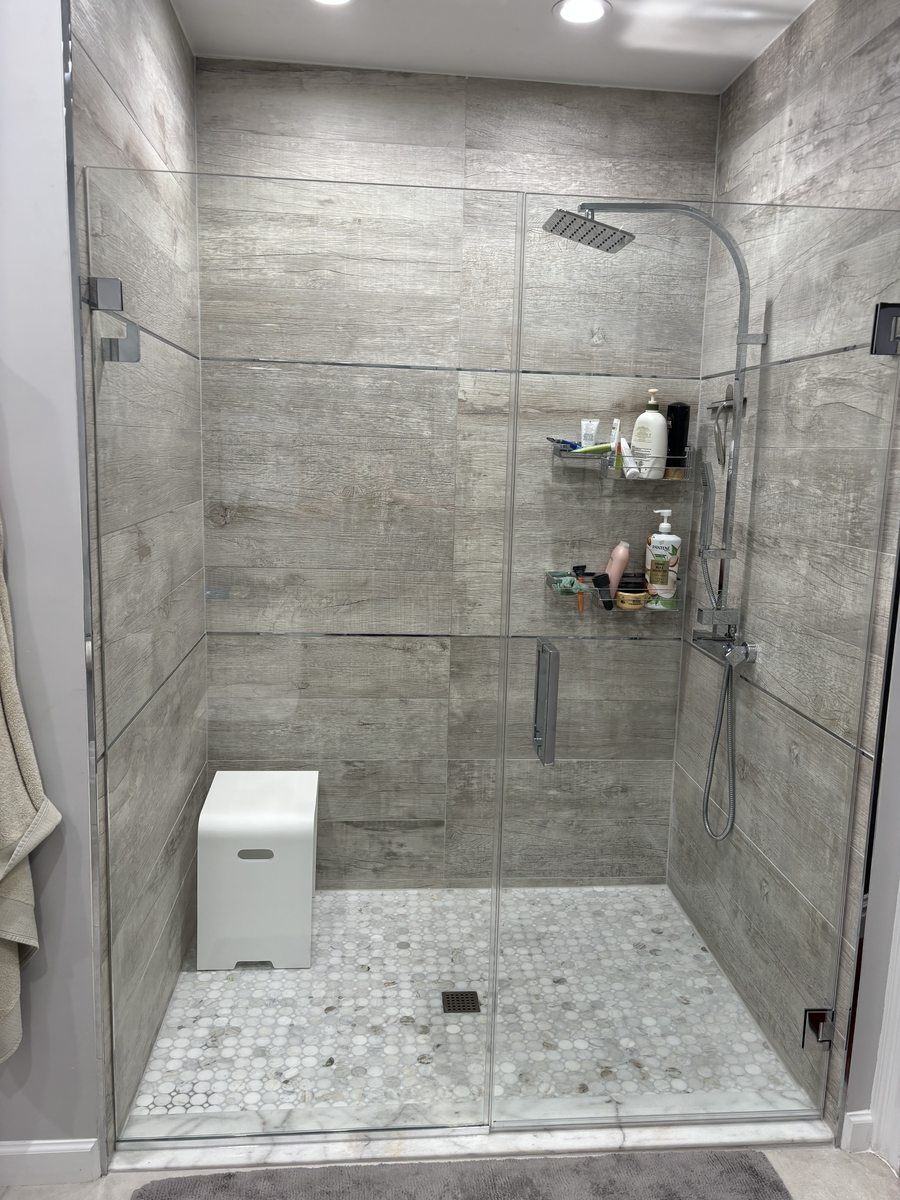
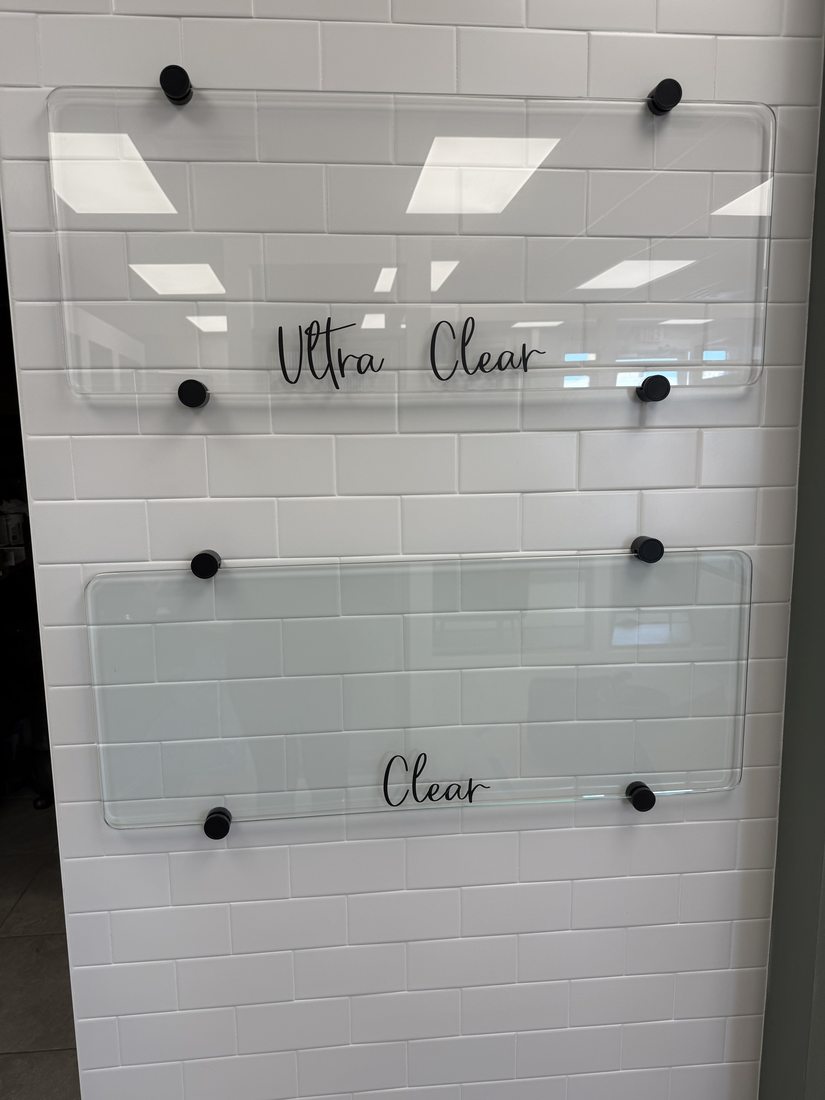
Every piece of standard architectural glass has a small amount of iron in it. You don't notice it in a windowpane, but in a thick frameless shower door — and especially at every polished edge — it shows up as a faint green or blue-green cast.
Low-iron glass, often called Starphire after the well-known trade name, is made with significantly less iron. The result is a truly colorless pane: water-clear in the middle, water-clear at the edges, and accurate to whatever's behind it.
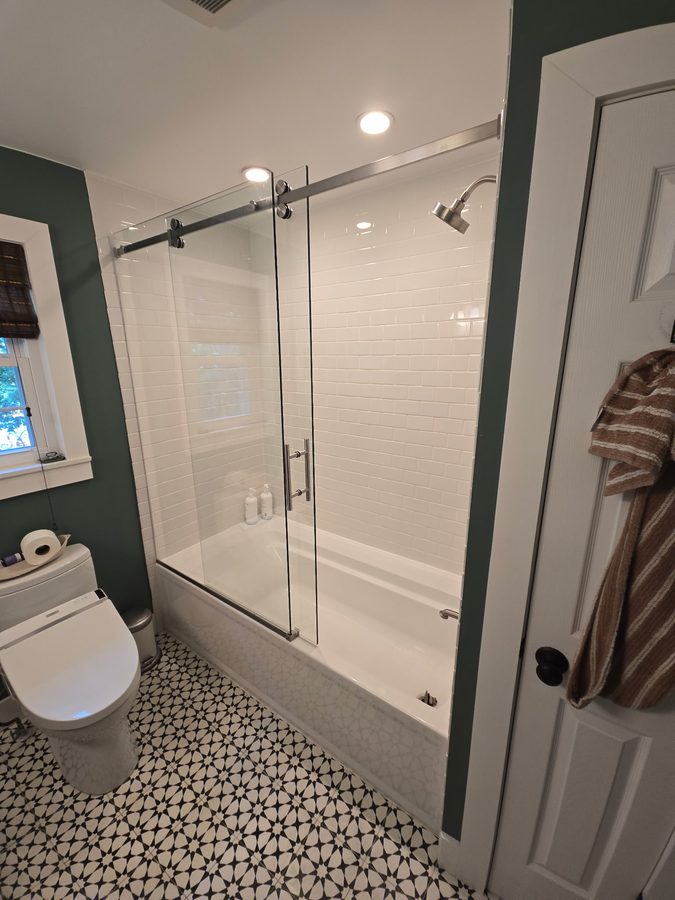
Low-iron is an upgrade — it costs more than standard. So when is it the right call, and when is standard fine?
If you've invested in the tile, you should invest in the glass that lets you see it. Otherwise the green cast quietly muddies everything you spent your design budget on.
For darker stone, smoky tile or heavily patterned mosaics, standard glass is often perfectly fine — the green simply doesn't show against a dark background. We'll tell you straight when it's worth the upgrade and when it isn't.
Ask Us About Your TileStandard architectural glass has a small amount of iron in it, which gives it a faint green or blue-green cast — especially visible along cut edges and in thicker pieces. Low-iron glass (often called Starphire, after the well-known trade name) is made with much less iron, so it looks truly colorless. The result is glass that lets the actual color of your tile, stone or hardware come through accurately.
Yes, particularly in thick glass and at the edges. In a 3/8" or 1/2" frameless shower door, standard glass has a visible green tint along every polished edge. Low-iron looks water-clear, edge to edge. If you've invested in white marble, light stone, glossy white subway or any pale tile, low-iron is the upgrade that lets it look the color you picked.
It does — typically a 20–35% upcharge on the glass itself, depending on thickness and size. It's a premium material, and we treat it as a finish-level upgrade. For most jobs the dollar difference is meaningful but not large in the context of a full enclosure, and homeowners who choose it almost never regret it.
We stock low-iron in both 3/8" and 1/2" tempered safety glass — the same thicknesses we use for any true frameless enclosure. You don't lose any of the substantial premium feel; you just lose the green.
Absolutely — and we recommend it. Low-iron glass shows water spots and mineral buildup more clearly than tinted standard glass because it's so colorless. The optional hydrophobic coating bonds to the surface so water beads up and rolls off, which keeps the crystal-clear look looking that way.
Yes. We can apply frost, reeded patterns and other textures over low-iron glass — you get the privacy or pattern you want without the green tint. It's a popular choice for half-frosted doors where the contrast between the textured zone and the clear zone really pops.
If you're spending the money on low-iron glass, the rest of the build matters too. We use premium hardware, precise field measurements and our own in-house installation team. No subcontractors. No guesswork. No vague pricing. Just a crystal-clear enclosure built to showcase the tile you fell in love with.
Low-iron typically runs 20–35% above standard glass for the same enclosure spec — exact dollars depend on size, thickness, hardware finish and coating. We give you a firm, itemized quote after a free in-home measure — and offer monthly payment options so you don't have to choose between quality and budget.
Tell us about your project — we'll schedule your free in-home measure with no obligation, and you'll have a firm written quote in hand within a couple of days.
Call, text or fill out the form — we'll get back to you with a free estimate, typically within one business day.
Text Jessica directly and she'll get right back to you. To speed things up, include: