Quick answer: Back-painted glass is ideal for spa-style bathrooms because it is fully waterproof, has zero grout to mildew or stain, comes in soft neutral colors that read as calming, and visually integrates with frameless shower enclosures and large-format mirrors. The most successful spa-bathroom installations pair a back-painted vanity wall in a warm white or soft greige with a frameless low-iron shower enclosure, with the painted glass extending into the shower as a continuous wet-wall surface.
For the full guide to the material itself, see our complete back-painted glass buyer's guide. This guide focuses on the bathroom application — what to use it for, how to spec it, and how it integrates with the other glass in the room.
Why back-painted glass belongs in spa bathrooms
The defining feature of a spa-style bathroom is calmness. The materials are quiet, the colors are restorative, the surfaces are seamless, and there is nothing that visually shouts. Standard bathroom finishes — ceramic tile with grout, painted drywall, mosaic accent walls — work against that goal because they introduce visible joints, repeating patterns, or surfaces that show wear quickly.
Back-painted glass solves several of these problems at once. The surface is a single seamless panel, so there is nothing to break up the visual plane. The material is impervious to water and steam, so the surface doesn't degrade or discolor over time. The color is sealed permanently behind the glass, so a warm white panel installed today still reads as warm white in 20 years.
It also reflects light in a way tile and paint cannot. The glossy front face acts as a soft mirror surface; light from the ceiling, the windows or a sconce bounces off the painted glass and lifts the entire room. In a spa bathroom where lighting is typically warm and intentional, that reflectivity makes the room feel more luminous and less enclosed.
Where to use it in the bathroom
Five locations where back-painted glass earns its keep in a spa bathroom:
- Vanity wall. The most common bathroom application — a floor-to-ceiling panel behind the vanity gives the room a continuous, seamless, luminous color plane. Sinks, faucets and electrical penetrations are cut into the glass at fabrication.
- Inside the shower. A single seamless wet-wall panel behind the showerhead — no grout to scrub, no joints to mildew, just a wipe-down after each use.
- Tub surround. A single color plane behind a freestanding or alcove tub delivers exactly the visual rest a spa bathroom is going for.
- Niche or accent wall. A single accent panel introduces the material without committing to it everywhere.
- Toilet alcove. A clean, intentional finish on what's often an awkward section of the bathroom.
For the full painted-glass service offering, see our painted glass page.
The right color palette for a spa bathroom
Spa-style bathrooms in North Jersey lean toward soft, restorative palettes. The colors that recur in successful installations:
- Warm white and creamy ivory. The most-requested palette. Reads bright, clean and luxurious without the cold feel of pure white.
- Soft greige. Warm gray with hints of beige. Pairs beautifully with white marble counters and oak or walnut vanity wood.
- Dove gray. A cool soft gray. Works in modern spa bathrooms with chrome or polished nickel fixtures.
- Soft sage. A muted green with herbal undertones — the trending palette of the moment for spa bathrooms.
- Dusty seafoam. Pale blue-green, slightly grayed. Reads coastal-spa, beautiful in bathrooms with natural light.
- Soft mushroom or putty. Neutral warm tan-gray that pairs with virtually anything.
The pattern across all of them is the same: low saturation, soft tone, no high contrast. For more on color selection, see our guide to the best kitchen backsplash colors for back-painted glass — the framework is similar with the palette shifted toward softer, cooler tones.
Pairing with frameless shower glass and low-iron
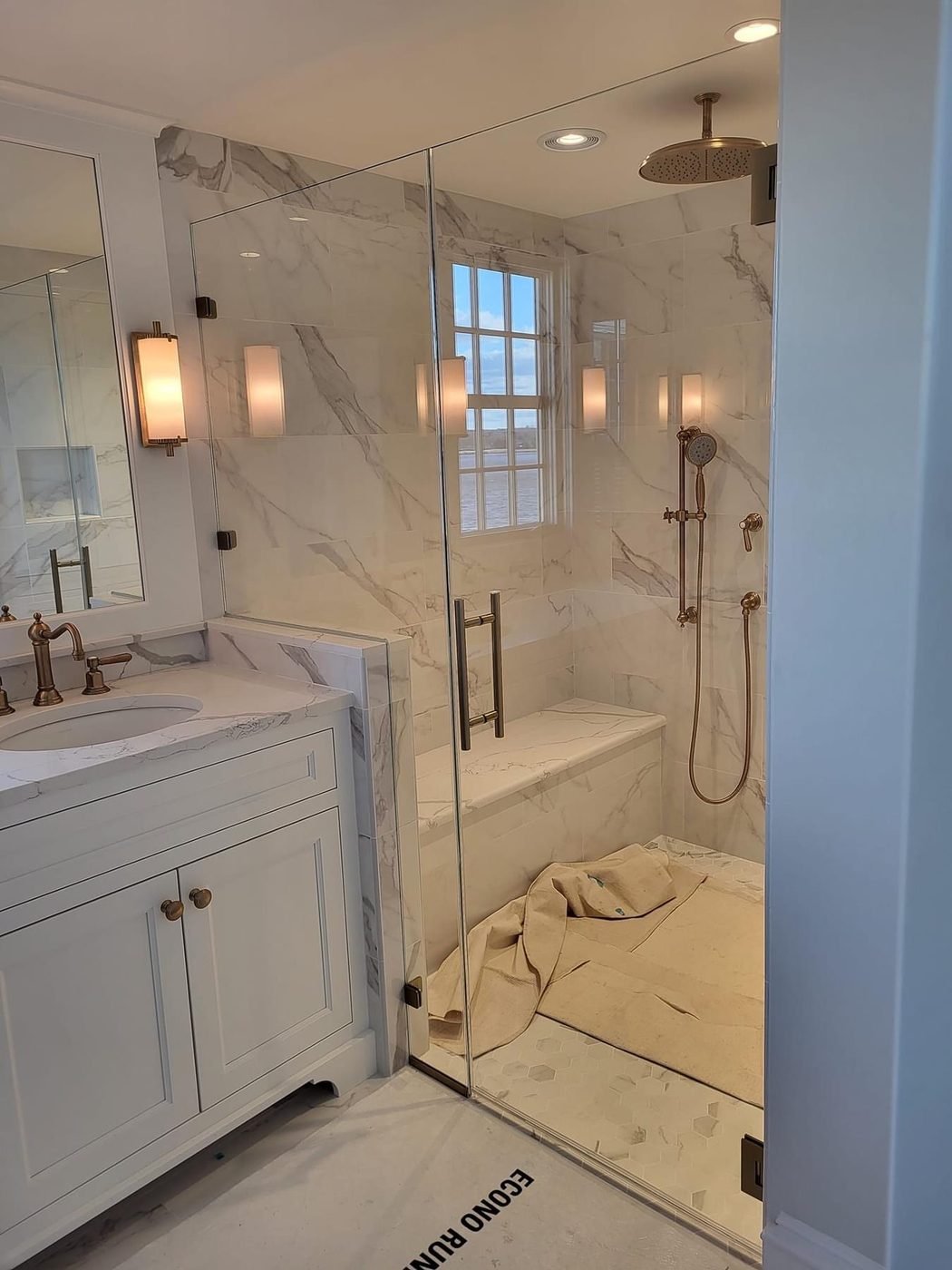
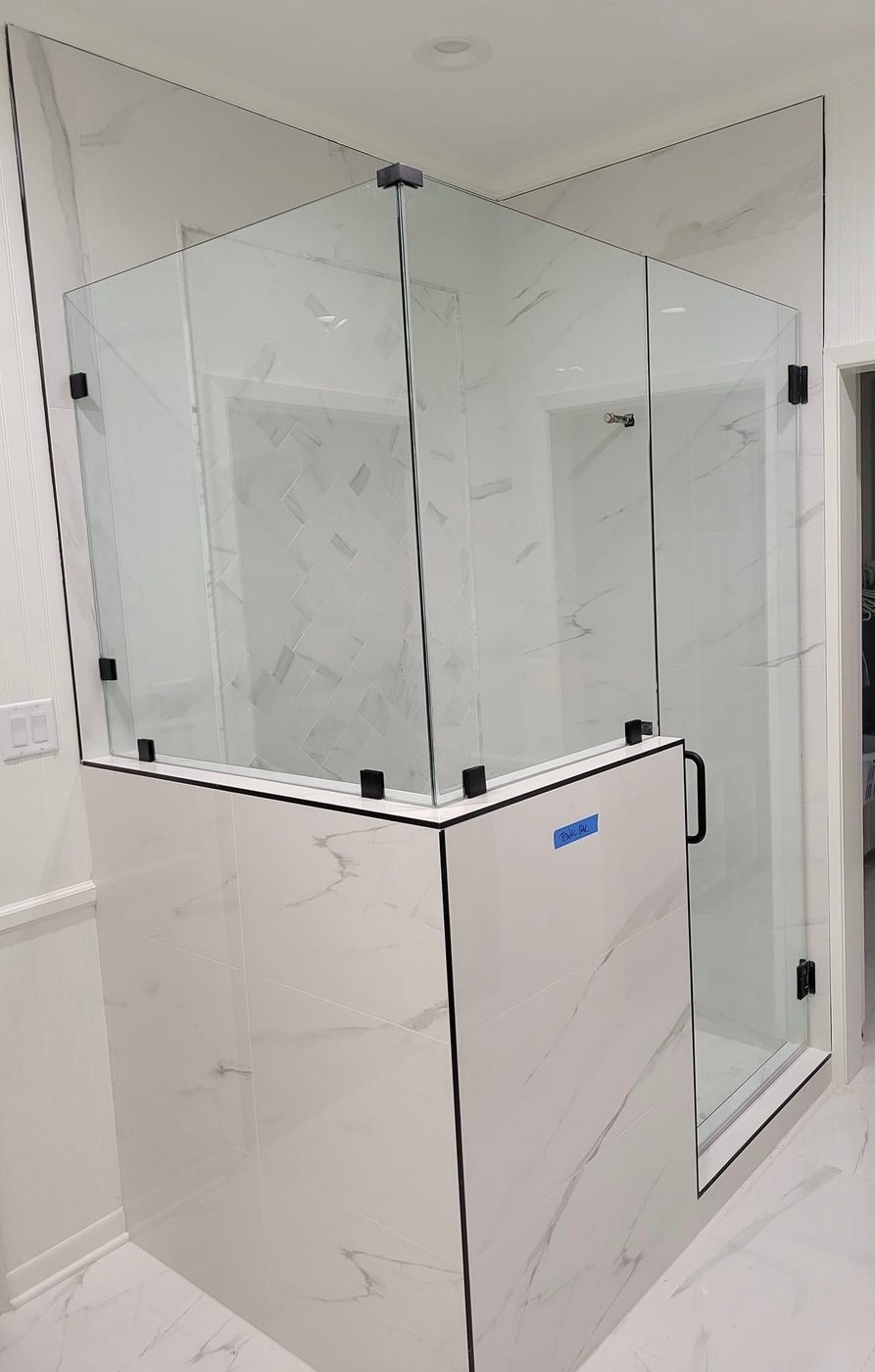
The single highest-impact decision in a spa bathroom is how the back-painted glass coordinates with the shower enclosure. The premium pairing is frameless low-iron shower enclosure plus back-painted glass wet wall. The frameless enclosure removes all visible metal framing; low-iron glass eliminates the faint greenish tint of standard clear glass. The result: a shower enclosure that visually disappears — you see straight through to the painted-glass wall as if the enclosure weren't there.
Standard clear glass shower enclosures are 30–40% cheaper than low-iron, but the green tint becomes visible against pale painted colors (a warm white wall behind standard shower glass will read with a slight cool cast). For more saturated colors (sage, dusty blue, charcoal) the difference is much less visible. We recommend low-iron for both elements when the budget allows, especially for paler colors. For more on shower enclosure options, see our complete guide to custom shower doors.
Moisture, steam and condensation
Back-painted glass is essentially immune to bathroom moisture. The tempered glass front face is non-porous and impervious to water in any form. The paint is sealed on the back of the panel behind a protective backing, so it never contacts moisture. Steam fogs the front surface in the moment (the same way it fogs a mirror) but wipes off cleanly. After a year of daily showers in a panel-walled bathroom, the glass is identical to the day it was installed. The one consideration is the perimeter seal — marine-grade silicone is used in bathroom installations, and after 8–10 years can be re-touched as routine maintenance.
Tip: If your bathroom has a ventilation issue, address it before specifying a painted-glass install. The glass itself is impervious, but the wall behind it still needs to dry out — and a poorly ventilated bathroom can cause moisture issues in the substrate.
Templating, fabrication and install
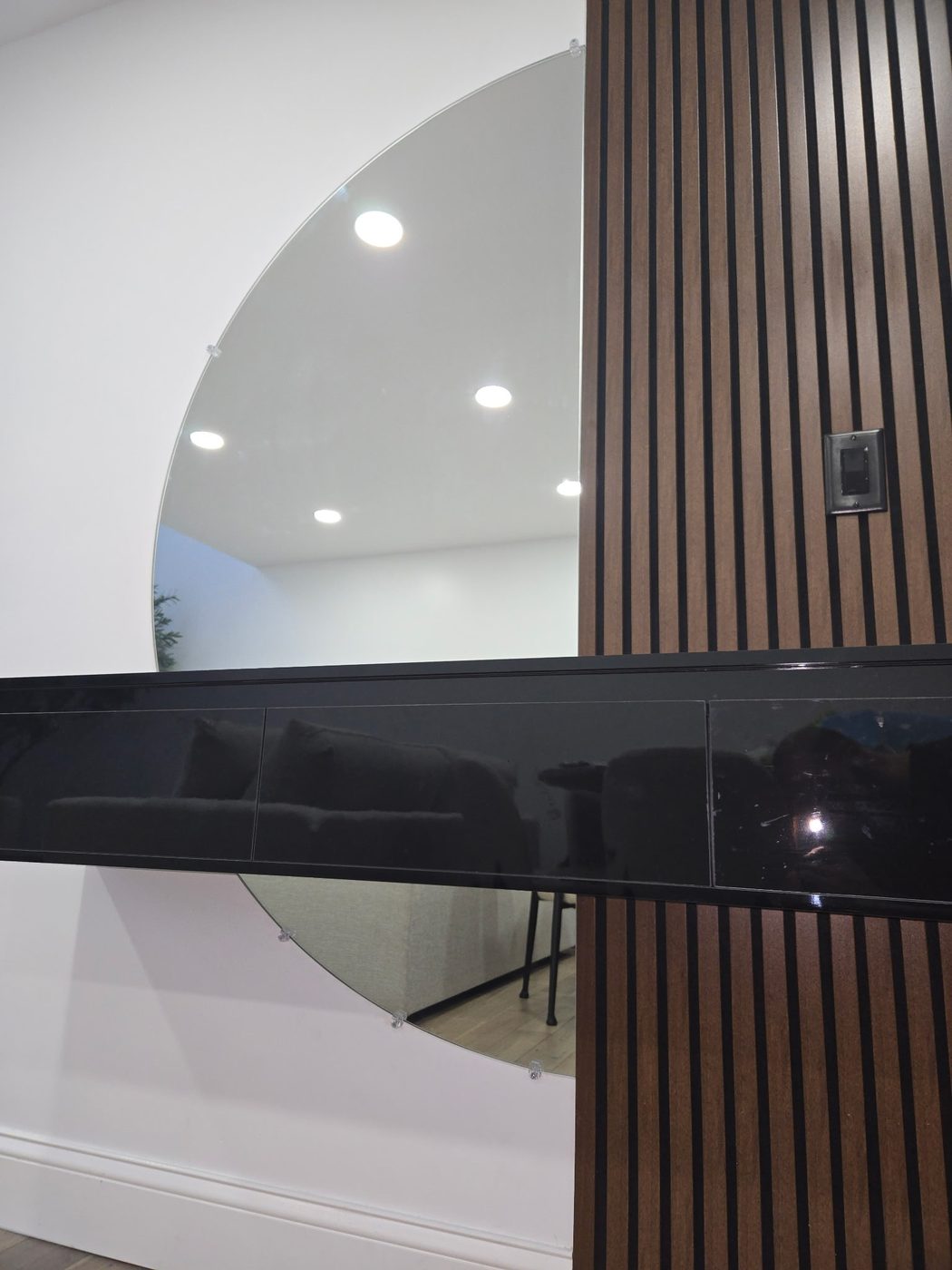
Bathrooms have geometry challenges that kitchen backsplashes don't — corners often out of square, walls not perfectly flat, and shower curbs, niches and tubs introducing non-rectangular cuts. The sequence: initial in-home measure after the bathroom is roughed in, detailed template after the substrate is finished (with plumbing and electrical penetrations marked), 2–3 weeks of off-site fabrication, then a one-day install. For a major bathroom remodel involving painted glass and a frameless shower enclosure, the typical timeline is 4–6 weeks from initial measure to install.
Planning a spa-style bathroom in NJ?
Jessica will walk through your bathroom plans, pull samples in the right palette, and quote the painted glass alongside any shower enclosure or mirror work. Most quotes returned within one business day.
Get a Free Bathroom ConsultationCost considerations for bathroom installs
Bathroom back-painted glass typically runs slightly higher per square foot than kitchen backsplash work for several reasons. Bathroom panels often involve more cutouts (sinks, faucets, towel bars, electrical), more complex geometry (corners, niches, tub surrounds), and almost always benefit from low-iron upgrade (which adds 30–40% to the glass cost). A complete spa-bathroom install with painted glass walls, a frameless shower enclosure and a custom mirror typically runs $5,500–$12,000 fully installed, depending on size and complexity.
For comparison: a tiled equivalent of the same bathroom (ceramic field tile, basic shower enclosure, standard medicine cabinet) typically runs $4,000–$8,000. The glass premium is real but smaller as a share of total bathroom remodel cost than people expect — bathroom remodels are dominated by labor, plumbing and fixtures, and the wall surface is usually 15–25% of the total budget.
The lifetime maintenance argument applies even more strongly in bathrooms than in kitchens. Bathroom grout has a notoriously short useful life — re-grouting at year 5–7 is common, and the labor cost of re-grouting in a wet environment is meaningful. Back-painted glass effectively eliminates that maintenance line.
Putting it together
A spa-style bathroom in North Jersey is at its best when the design is built around three or four high-impact decisions. The wall surface is one of them. Back-painted glass in a soft restorative color, paired with a frameless low-iron shower enclosure and a custom mirror, gives the bathroom a coherent visual character that ceramic tile and painted drywall can never match.
Bring your floor plan, your tile and stone selections, your fixture choices and your color preferences to an in-home consultation and we'll work backward from the bathroom you're trying to create. The right material specification — color, finish, low-iron or standard, panel layout, integration with the shower enclosure — usually clarifies itself in about an hour at the kitchen table.