
The glass gets the attention. The hardware does the design work. Posts, base shoe, top cap, clamps and standoffs are the only opaque pieces in the assembly — their finish ties the railing to the rest of the room.
For the broader buyer view, see our pillar: Glass Railings in NJ: Code, Cost & Design.
The five finishes that cover 90% of NJ work
| Finish | Look | Best use | Outdoor durability | Care |
|---|---|---|---|---|
| Brushed stainless | Cool silver, soft directional grain | Modern, transitional, neutral palettes | Excellent (304 indoor / 316 marine for coastal) | Soft cloth, mild soap, occasional stainless cleaner with the grain |
| Satin nickel | Warmer silver, slightly softer sheen | Traditional and transitional with nickel plumbing | Good indoors; PVD nickel on 316 for exterior | Soft cloth, mild soap; no ammonia or abrasives |
| Matte black | Deep flat black, graphic and contemporary | Modern, industrial and farmhouse-modern | Excellent as PVD on 316; fair as powder coat | Soap and water only; no acidic or abrasive cleaners |
| Brushed brass (PVD) | Warm metallic gold, brushed satin grain | Transitional, warm modern, off-white interiors | Excellent as PVD on 316; fair as living brass | Soap and water; never polish PVD brass |
| Oil-rubbed bronze | Dark warm brown-black, ages with touch wear | Traditional, craftsman, classic baths | Good interior; not ideal for direct salt exposure | Dry microfiber; wear is part of the look |
The same five finishes are available across base shoe, posts, top cap, glass clamps and standoffs, so a complete glass-railing system can be specified in a single finish family. That consistency is more important than the specific finish chosen — mixing two metallic finishes on the railing itself rarely reads as intentional.
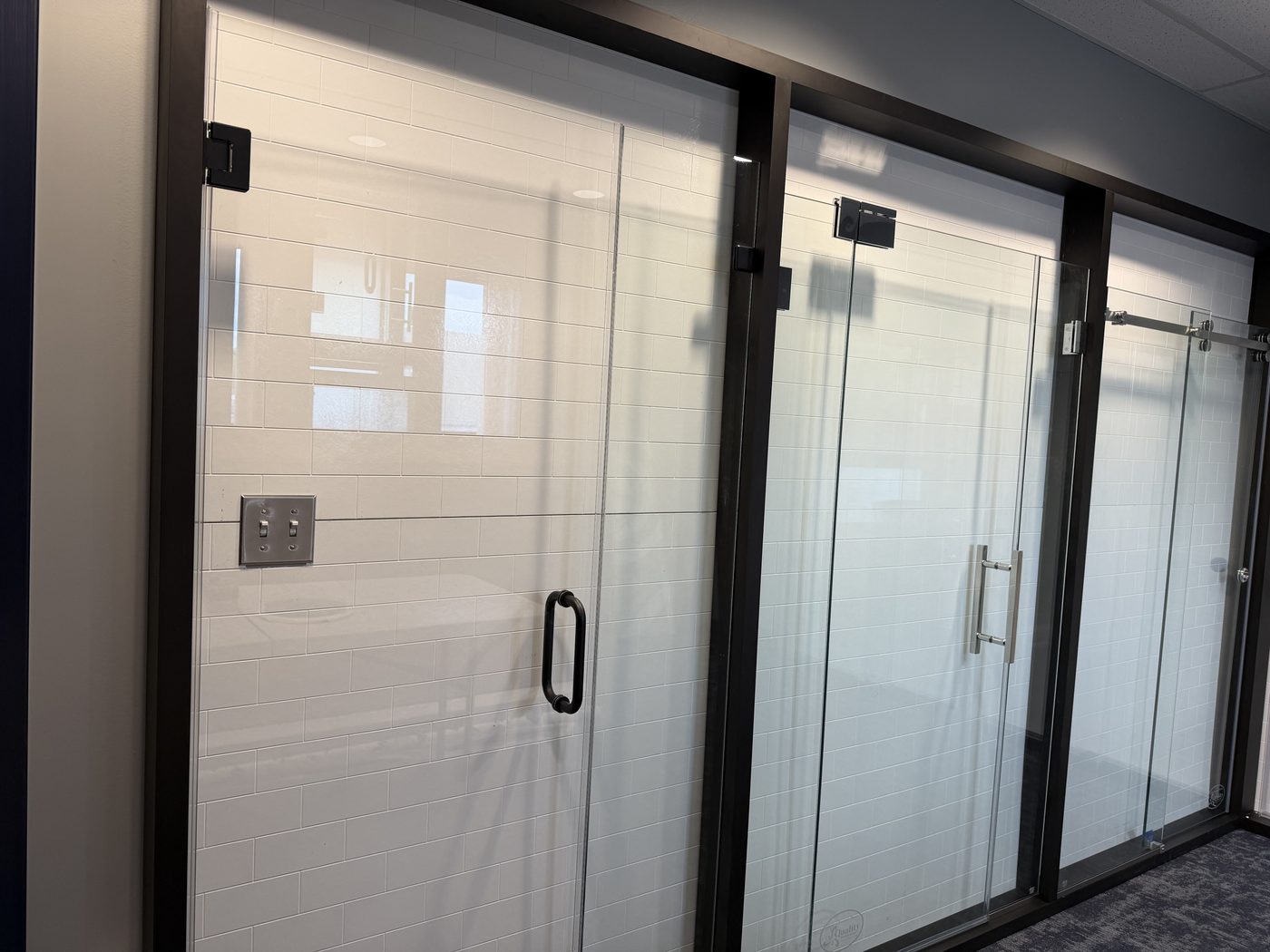
Brushed stainless steel
The default — neutral, durable, fades into almost any palette. Works in modern homes (cool tone against white walls and gray stone), transitional spaces, and commercial projects. Doesn't quite land in deeply traditional interiors with warm wood and bronze elsewhere.
Substrate: 304 stainless for interior and inland exterior. 316 (marine grade) stainless for Jersey Shore salt-air, pool decks, oceanfront balconies, and heavily-salted commercial walkways. Both grades take the same brushed finish but corrosion behavior over 20 years is dramatically different.
Satin nickel
Slightly warmer than brushed stainless with a softer sheen. Right when the house leans traditional or transitional and existing door hardware, faucets and lighting are in the nickel family. In warm wood and warm whites, nickel reads correct where stainless reads cold.
For exterior installs, satin nickel must be PVD over 316 stainless — electroplated nickel over steel doesn't hold up to salt air or pool chemistry.
Matte black
The most graphic, most modern finish — and the fastest-growing residential NJ request. Reads as a confident line drawing against any pale wall, and pairs with both warm and cool palettes.
Substrate matters more here than with any other finish:
- PVD on 316 stainless. Black color fused into the surface at the atomic level. Doesn't chip, peel or fade in UV. Marine-grade underneath. The right spec for exterior and most interior installs.
- Powder coat on steel or aluminum. Less expensive at install. Fine indoors. Outdoors can chalk, fade or chip after several years in UV or salt.
A bid that says "matte black" without specifying PVD/316 vs powder coat is incomplete.
Brushed brass (PVD)
The warm-metallic answer — the finish that has pushed glass railings out of strictly-modern into transitional and traditional homes. The brushed grain takes brass from "shiny" to "intentional"; pairs with white oak, walnut, off-white walls and earthy stones.
Two products under the brass banner:
- PVD brass on 316 stainless. Uniform, doesn't tarnish or patina. Holds appearance indefinitely outdoors. Recommended for almost every brass railing.
- Solid or plated "living brass." Patinas over time with handling. On a constantly-touched railing the pattern reads uneven. We rarely spec this.
Against cool gray, brass reads out of place — go brushed stainless or matte black instead.
Oil-rubbed bronze
Dark, warm, traditional. At home in classic baths, craftsman homes, library/study spaces, and staircases where the railing should read as a quiet anchor.
The defining property: oil-rubbed bronze is designed to wear. High-touch areas naturally lighten over years, revealing brighter bronze tones. To traditional clients this is the point. To modern clients it can read as a coating failure. Match the finish to the design intent.
Not ideal for direct salt-air exposure — switch to solid architectural bronze, which patinas naturally outdoors. The highest-cost finish, usually reserved for landmark projects.
Outdoors: substrate matters as much as color
For any NJ railing that lives outdoors, the substrate's corrosion behavior matters at least as much as the visible finish. The single most important spec on the proposal is the stainless grade.
| Substrate | Where it works | Where it fails |
|---|---|---|
| 304 stainless | Interior. Exterior more than ~5 mi from coast. Light commercial. | Direct salt-air exposure (rust spotting and pitting over 5–10 years) |
| 316 (marine) stainless | Any exterior in NJ — coastal, pool deck, road-salt zones, oceanfront balconies. | Rarely fails; appropriate everywhere |
| Powder-coated steel/aluminum | Sheltered interior or covered exterior | Direct UV + salt exposure: chalking, chipping over 3–7 years |
| Solid architectural bronze | Exterior traditional or landmark work; patinas naturally | Cost-sensitive projects; modern aesthetics |
316 over 304 is typically 15 to 30 percent more — small money relative to replacing pitted hardware after a decade.
Shore-area rule of thumb: east of the Garden State Parkway or in sight of salt water, spec 316. Inland Bergen County can run 304 indoors and 316 outdoors. When in doubt, default to 316.
Matching the finish to the interior
The simplest rule that works in almost every home: match the railing hardware to the dominant metal in the same sight line — usually the door hardware, the kitchen plumbing one floor away, or stair-rail accents on the same staircase.
Pairings that work consistently:
- Matte black — white walls, black-framed windows, matte-black plumbing. Most flexible for a modern home.
- Brushed brass — off-white walls, white oak or walnut, brushed-brass plumbing, travertine/quartzite.
- Brushed stainless — almost anything; default neutral. Correct with cool grays, modern stone and commercial palettes.
- Satin nickel — brushed-nickel plumbing, transitional cabinetry, rooms mixing warm wood with cool walls.
- Oil-rubbed bronze — deep wood paneling, traditional baths, craftsman-era homes, classical design language.
Mixing two metallic finishes on the railing itself almost never reads as intentional. Mixing the railing finish with one or two different finishes elsewhere in the house is fine.
Not sure which finish is right for your project?
Send us a couple photos of the room and the existing door hardware, plumbing or stair accents. We'll suggest one or two finishes that pair correctly and bring samples to the in-home consult. The right finish is usually obvious once two options are sitting next to the existing metals.
Get a Free QuoteCare and cleaning, by finish
Each finish has dos and don'ts that determine how it looks at year 10.
Brushed stainless and satin nickel. Soft microfiber with mild dish-soap. For water spots, follow with stainless cleaner applied in the direction of the grain. Avoid ammonia, chlorine, abrasives and acidic cleaners.
Matte black and PVD finishes. Mild soap and water only. No abrasives, acids or ammonia. A damp microfiber once a quarter is sufficient.
Brushed brass. If PVD, treat like matte black — soap and water, no polish. Never use brass polish on PVD brass; it strips the coating. Living brass tolerates occasional polish but patinas in high-touch areas regardless.
Oil-rubbed bronze. Dry microfiber only. Wear in high-touch zones is part of the design intent.
Outdoor cleaning, any finish. Twice-yearly fresh-water rinse removes deposited salt. Shore homes benefit from monthly rinses in high-spray months.
What this costs
Finish choice typically swings hardware cost by 30 to 80 percent on a given system — roughly a 10 to 20 percent change to the total installed railing budget. The 304 vs 316 substrate adds another 15 to 30 percent for exterior installs.
Finish ladder, least to most expensive: powder coat on aluminum (entry-level interior) → brushed 304 stainless (residential baseline) → satin nickel and matte powder coat on steel (close to baseline) → brushed 316 stainless (15–30% above; exterior default) → matte-black or brushed-brass PVD on 316 (30–60%) → oil-rubbed bronze (30–80%) → solid architectural bronze (60–150%; landmark-tier).
Every quote breaks finish out as a separate line. If you're between two finishes, we'll quote both side by side at no charge.
Putting it all together
Finish is where the railing meets the architecture. The five-finish lineup covers nearly every NJ project, and the right choice is almost always obvious once two options sit next to the existing door hardware in the room. For exterior installs, substrate matters as much as color — 316 stainless and PVD coatings are the right defaults for coastal, pool or salted exposure.
See the glass railings pillar, curved staircase, waterfront homes, or the active service. Or send photos of the room and we'll suggest two finishes that pair correctly with the architecture.